ROLE OF BIOMARKERS IN EARLY DIAGNOSIS OF ALZHEIMER’S DISEASE
Article Sidebar
Main Article Content
Abstract
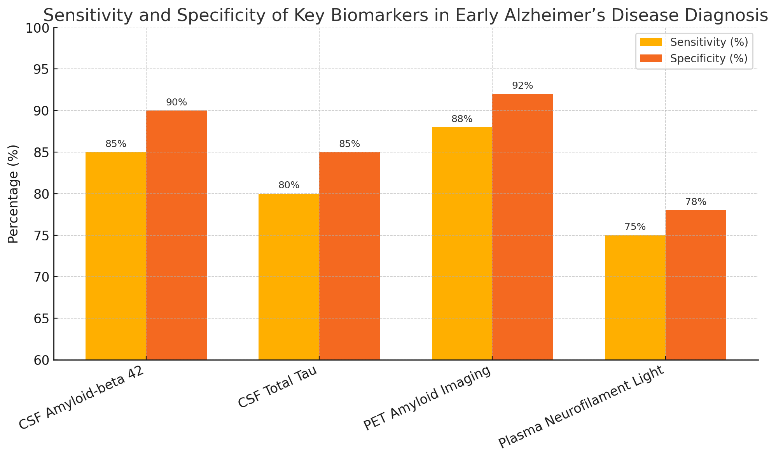
Alzheimer’s Disease (AD) is a progressive neurodegenerative disorder marked by cognitive decline and memory loss. Early diagnosis is critical for therapeutic interventions and management to slow disease progression. Biomarkers, including cerebrospinal fluid (CSF) proteins, neuroimaging, and blood-based indicators, have emerged as pivotal tools for early detection of AD pathology prior to clinical symptom onset. This review critically evaluates the current role of biomarkers in the early diagnosis of Alzheimer’s Disease, focusing on their diagnostic accuracy, accessibility, and integration into clinical practice. Special attention is given to biomarker research advancements within Pakistan and similar low-resource settings. Findings suggest that multimodal biomarker approaches improve diagnostic sensitivity and specificity, facilitating early intervention. However, challenges such as cost, standardization, and infrastructural limitations hinder widespread implementation. This article advocates for focused research and policy frameworks to enhance biomarker-based diagnostics in Pakistan.
Downloads
Article Details
Section

This work is licensed under a Creative Commons Attribution-NonCommercial-NoDerivatives 4.0 International License.
-
All published articles are open access, with copyright shared between the authors and the journal. The journal retains the exclusive right to first publication and identifies itself as original publisher.
-
Articles are made available under a Creative Commons CC BY‑NC‑ND 4.0 license, permitting users to copy and distribute the content for non‑commercial purposes only, without modification, provided proper credit is given to authors and JCPHS.
-
Redistribution or reuse must preserve the full citation details and include a link to the license. No derivatives, adaptations, or commercial uses are permitted without prior written permission.